
Most Germans call smartphone use at the dinner table rude, survey finds
Section: Arts
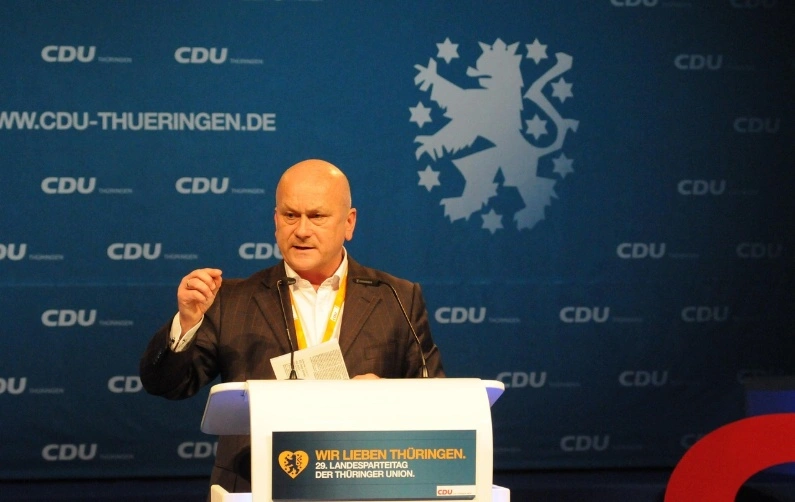
Germany's maritime coordinator, Christoph Ploß, said he expects the federal government and the states to reach a swift agreement over how to fund the country's seaports, with a deal possible before the end of this year. The Hamburg lawmaker from the Christian Democratic Union (CDU) told the German Press Agency he was pushing for a joint solution within 2026.
"It is clear to me that the federal government must contribute more to financing Germany's seaports, but the states also need to make an additional contribution," Ploß said. He added that mutual blame between Berlin and the states would not help resolve the dispute.
Currently, the federal government provides 38.3 million euros a year for all of Germany's seaports combined, a sum that coastal states and port industry representatives have long argued is too low. They have repeatedly called for a significant increase in federal support.
Ploß said Germany's seaports and waterways were central to the country's export economy, energy supply and defence capability. "That is why we need significantly more investment than before, to make the ports fit for the future," he said. He added that investment in seaports could also make an important contribution to boosting economic growth nationally.
He singled out funding for new port technologies, particularly those used to digitise port processes, as a priority. "Here too, I will push for reliable financing," Ploß said, adding that German ports needed to keep pace with international competitors in that area.
Ploß also pushed back against broader criticism of cooperation within the federal coalition, saying that collaboration between the CDU, its Bavarian sister party the Christian Social Union (CSU), and the Social Democratic Party (SPD) on port policy was working well. "We are not getting bogged down in pointless conflicts or side issues. Instead, we are working together toward the goal of strengthening the maritime economy across Germany," he said.
He said he was confident that the coalition of the CDU, CSU and SPD, often referred to as the "black-red" coalition because of the parties' traditional colours, could deliver further improvements for northern Germany's seaports.
The comments came days after Germany's state premiers called on the federal government to increase its financial commitment to the country's ports. In a resolution adopted at a conference of state premiers on Thursday, the federal government was urged to "finally agree with the states on better and fairer financing of German ports."
Hamburg's mayor, Peter Tschentscher of the SPD, said the resolution reflected the scale of what is at stake. He said ports, and Hamburg's harbour in particular as the largest seaport in Germany, secured supplies for the population and connected "the world's third-largest economy to international markets."
"They therefore fulfil a critical task in the national interest," Tschentscher said, referring to the role of German ports in maintaining supply chains and trade links.
The dispute over port financing has simmered for years, with coastal states such as Hamburg, Bremen, Lower Saxony and Schleswig-Holstein arguing that the federal government's current contribution does not match the national economic and strategic importance of the harbours. Port operators have also pointed to competition from major ports in the Netherlands and Belgium, which they say benefit from stronger state backing.
No figures were given for how much additional funding might be agreed, nor has a timetable been set beyond Ploß's stated goal of reaching an understanding within the current year. The federal government has not yet issued a formal response to the state premiers' resolution.
Discussions between Berlin and the coastal states are expected to continue in the coming months, with both sides under pressure from port industry groups to resolve the long-running dispute. Officials have not indicated whether a formal announcement on new funding levels could come before the end of 2026.
Section: Arts
Section: Science

Section: News

Section: Business
Section: Politics

Section: Politics

Section: Business
Section: Business

Section: Science
Section: Business
Both private Health Insurance in Germany and public insurance, is often complicated to navigate, not to mention expensive. As an expat, you are required to navigate this landscape within weeks of arriving, so check our FAQ on PKV. For our guide on resources and access to agents who can give you a competitive quote, try our PKV Calculator.
Germany is famous for its medical expertise and extensive number of hospitals and clinics. See this comprehensive directory of hospitals and clinics across the country, complete with links to their websites, addresses, contact info, and specializations/services.
Didn't manage to get a ticket for Linkin Park? Or still not enough after the concert? Join us at CRASH on June 12th for our "IN THE END" Linkin Park Special + CORE NIGHT.All night long, we'll be playing Linkin Park's music, along with Nu Metal, Metalcore, and Alternative Rock from bands such as Limp...



No comments yet. Be the first to comment!