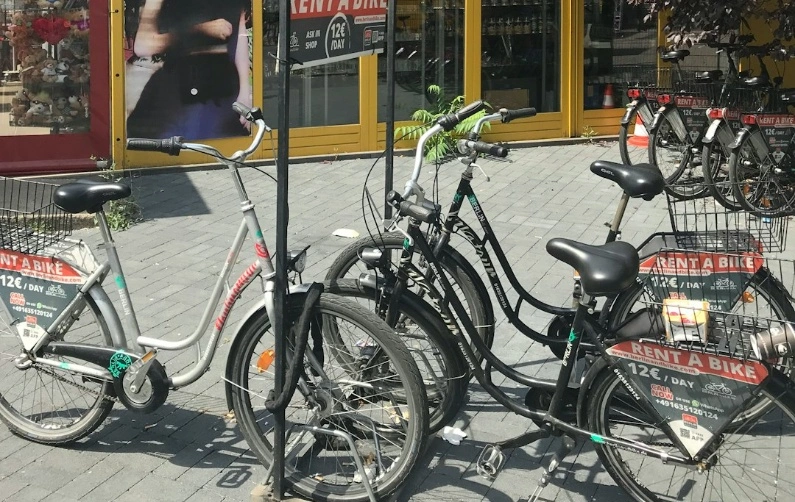
Berlin bicycle thefts top 17,000 in ten months as recovery rate stays low
Section: News
A proposed overhaul of Germany's partial retirement system for older workers could preserve as many as 110,000 full-time jobs and generate billions of euros in additional public revenue, according to an analysis published Wednesday by the German Institute for Economic Research, known as DIW, on behalf of the Bertelsmann Stiftung foundation.
The study examined what would happen if the government adopted two changes recommended by a pension commission appointed by the federal government: raising the minimum age for entering partial retirement, known in Germany as Altersteilzeit, from 55 to 58, and eventually linking that threshold to the standard retirement age. The commission also recommended scrapping the so-called block model, one of two common ways partial retirement arrangements are structured.
Under the block model, an employee works full time during the first half of their partial retirement period and then stops working entirely during the second half while still drawing pay. The alternative, known as the equal distribution model, has workers reduce their hours by half for the entire duration of the arrangement rather than front-loading full-time work followed by a complete break.
If both recommendations were implemented, between roughly 32,500 and 110,000 full-time positions could be preserved, depending on the scenario, the Bertelsmann Stiftung said in a statement issued in Gütersloh. The state could see additional annual revenue of between 818 million euros and about 2.8 billion euros, largely through higher income tax receipts, the foundation said.
Eric Thode, a labor market expert involved in the research, told the German press agency dpa that the wide range in the estimates reflects uncertainty over how workers aged 58 and older would respond to tighter rules. Some would likely still choose partial retirement despite the new restrictions, while others might opt to keep working full time instead, he said.
To account for that uncertainty, researchers modeled a range of outcomes, from a minimum scenario in which only 20 percent of eligible workers remain in full-time employment to a maximum scenario in which 80 percent continue working full time until they reach retirement age.
Not everyone in government supports eliminating the block model. Federal Labor Minister Alexander Schweitzer, a member of the Social Democratic Party, has spoken against abolishing it. He said recently that numerous companies had told him they would face a serious problem if the option were removed, and argued that it should remain available, at least for now.
The Bertelsmann Stiftung has argued that ending the block model would be one piece of a broader effort to extend working lives, a goal it describes as increasingly important given rising life expectancy, strained pension finances and shortages of skilled labor. The foundation noted that many job vacancies requiring qualified workers currently go unfilled, and said the knowledge and experience of older employees represent a resource that is often underused.
Germany's partial retirement system currently allows workers to begin Altersteilzeit from age 55, provided they have been in jobs requiring social insurance contributions for at least 1,080 calendar days during the preceding five years. The arrangement is voluntary and must be agreed between an employee and employer, often through individual contracts, company agreements or collective bargaining agreements. There is no legal entitlement to partial retirement under current law.
The findings come as the German government continues to weigh a broader set of proposals aimed at reforming the national pension system, with the Alterssicherungskommission having put forward numerous recommendations beyond those concerning partial retirement. Lawmakers have not yet decided which, if any, of the commission's proposals will move forward.
Section: News

Section: News

Section: Fashion
Section: Politics
Section: Health

Section: News

Section: News
Section: Politics
Section: News

Section: News
Both private Health Insurance in Germany and public insurance, is often complicated to navigate, not to mention expensive. As an expat, you are required to navigate this landscape within weeks of arriving, so check our FAQ on PKV. For our guide on resources and access to agents who can give you a competitive quote, try our PKV Calculator.
Germany is famous for its medical expertise and extensive number of hospitals and clinics. See this comprehensive directory of hospitals and clinics across the country, complete with links to their websites, addresses, contact info, and specializations/services.
Didn't manage to get a ticket for Linkin Park? Or still not enough after the concert? Join us at CRASH on June 12th for our "IN THE END" Linkin Park Special + CORE NIGHT.All night long, we'll be playing Linkin Park's music, along with Nu Metal, Metalcore, and Alternative Rock from bands such as Limp...



No comments yet. Be the first to comment!