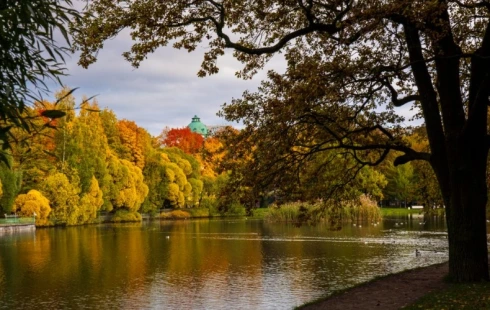
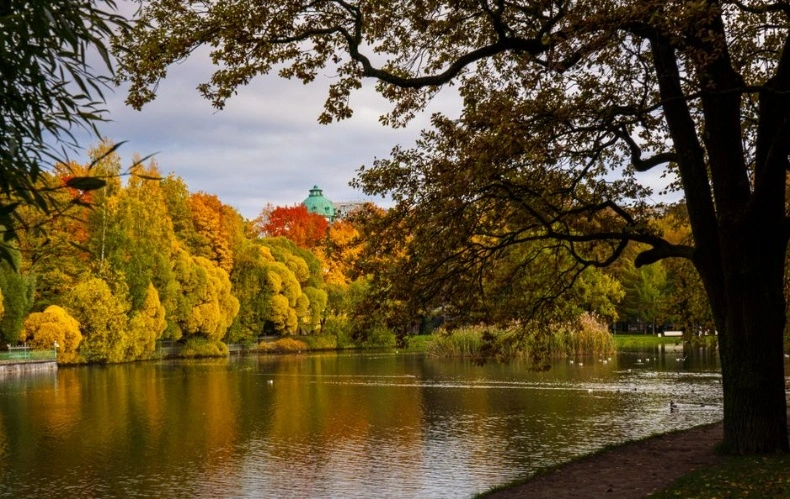
Why Autumn Doesn't Actually Start on September 21 This Year
Section: Science
September 21 has become a kind of cultural placeholder for "the start of fall" close enough to the real date most years that the assumption sticks, even though it's rarely exactly right. The actual astronomical start of autumn is determined by the September equinox, the precise moment the sun crosses directly over the Earth's equator on its path toward the Southern Hemisphere, and that moment doesn't land on the same calendar date every year.
The equinox date shifts because a calendar year doesn't divide evenly into the time it actually takes Earth to orbit the sun roughly 365.25 days, not a flat 365. That quarter-day discrepancy accumulates year to year, nudging the equinox's exact timing forward, until a leap year resets the drift by adding a day back into the calendar. As a result, the September equinox typically lands somewhere between September 21 and 24, depending on where a given year falls in that four-year leap cycle. 2026 happens to fall later in that cycle, which is why the equinox lands on the 23rd rather than the 21st or 22nd this time around.
The word comes from Latin for "equal night" on the equinox, day and night run close to equal length nearly everywhere on Earth, since the sun sits directly above the equator rather than tilted toward either hemisphere. From this point through the December solstice, the Northern Hemisphere tips progressively away from the sun, bringing shorter days and the seasonal cooling associated with autumn a gradual process, not something that switches on the moment the equinox hits.
For most day-to-day purposes, no — nobody's afternoon light or morning temperature changes meaningfully between September 21 and 23. But the distinction matters for anyone relying on precise seasonal timing: agricultural planning, astronomical observation, and any tradition or ritual tied specifically to the equinox itself rather than a general sense of "early autumn." It's also simply a detail worth getting right if you're the kind of person who likes their seasonal facts precise rather than approximate and a reminder that plenty of things treated as fixed calendar facts are actually tracking something more mathematically fluid underneath.
Sources: Sortiraparis; standard astronomical equinox calculations.
Photo by Eliza Ari on Pexels
Section: Science

Section: News
Section: News
Section: Health

Section: News
Section: Politics

Section: Business

Section: Politics
Section: Business
Section: Business
Both private Health Insurance in Germany and public insurance, is often complicated to navigate, not to mention expensive. As an expat, you are required to navigate this landscape within weeks of arriving, so check our FAQ on PKV. For our guide on resources and access to agents who can give you a competitive quote, try our PKV Calculator.
Germany is famous for its medical expertise and extensive number of hospitals and clinics. See this comprehensive directory of hospitals and clinics across the country, complete with links to their websites, addresses, contact info, and specializations/services.
Didn't manage to get a ticket for Linkin Park? Or still not enough after the concert? Join us at CRASH on June 12th for our "IN THE END" Linkin Park Special + CORE NIGHT.All night long, we'll be playing Linkin Park's music, along with Nu Metal, Metalcore, and Alternative Rock from bands such as Limp...

No comments yet. Be the first to comment!