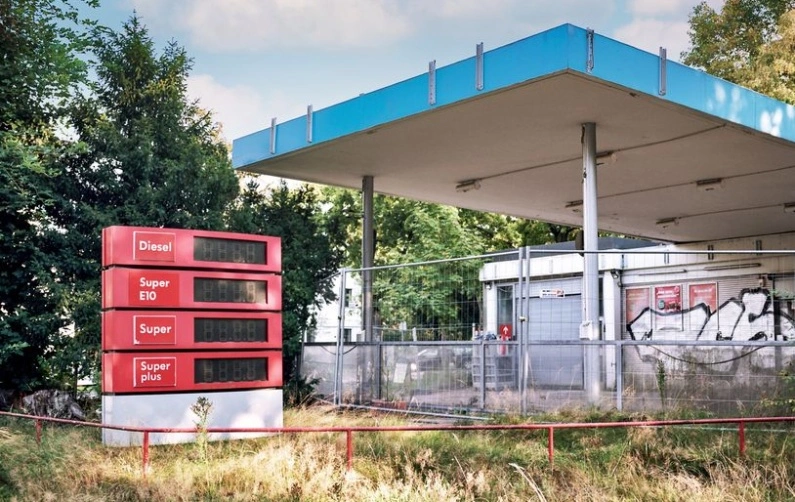
German Diesel Prices Hit Record High Amid Red Sea Crisis
Section: Politics
German Chancellor Friedrich Merz has promised measures to ease the burden of record fuel prices on drivers, saying a formal proposal will be presented "very soon." The pledge, made Tuesday at an event hosted by the German foreign trade association BGA, has reopened debate over which relief measures the government might adopt.
According to figures from motoring organization ADAC, the price of Super E10 gasoline in Germany rose for a fourth consecutive day on Tuesday, reaching its highest level on record. The increase has come even though crude oil prices on world markets remain well below previous peak levels, prompting scrutiny of why pump prices have climbed so sharply.
Merz did not detail what form the relief would take, but he confirmed that his government intends to act quickly. His remarks have prompted several lawmakers and officials to renew proposals that have circulated for months.
Thorsten Frei, chairman of the conservative Union parliamentary group, proposed on Wednesday cutting the value-added tax applied to fuel. Gasoline and diesel currently carry Germany's standard VAT rate of 19 percent. Frei has called for reducing that rate to 7 percent, arguing it would lower prices at the pump for drivers.
Such a cut would only benefit consumers if oil companies do not respond by raising the pre-tax price of fuel to offset the tax reduction. Critics of the idea note it would do nothing to curb the use of fossil fuels and could in fact make high consumption more attractive by lowering costs, running counter to climate policy goals. The measure would also benefit wealthier drivers who can already absorb higher fuel costs, while a VAT cut would reduce government revenue without affecting the profit margins of fuel retailers.
A second proposal under discussion involves lowering Germany's energy tax on fuel to the minimum level permitted under European Union rules, which stands at 35.90 cents per liter for gasoline and 33 cents per liter for diesel. That approach would effectively revive the fuel discount, or "Tankrabatt," that the German government introduced in May and June to soften the impact of previous price surges. Sebastian Steineke, the Union parliamentary group's consumer protection spokesman, argued in favor of this option in comments to the newspaper Handelsblatt.
The current spike in fuel prices has been linked primarily to escalating conflict in the Gulf region, involving the governments of the United States, Israel and Iran. Since February, the Strait of Hormuz, through which roughly one-fifth of the world's oil and liquefied gas normally passes, has become largely impassable.
Adding to the pressure, the Bab al-Mandab strait in the Red Sea, one of the shortest shipping routes between Asia and Europe, has come under blockade in recent days by Yemen's Houthi militia. That blockade has particularly disrupted oil exports from Saudi Arabia, removing significant volumes of crude from the global market and pushing prices higher worldwide.
Germany imports much of its oil and liquefied gas from other regions outside the Gulf, but energy companies have raised domestic prices in step with the broader market disruption, a move that has allowed firms to increase profits amid the crisis, according to reports cited in the ongoing debate over relief measures.
No final decision on which relief mechanism the government will pursue has been announced. Officials have indicated further details are expected in the coming days as the chancellor's office finalizes its proposal.
Section: Politics
Section: Business
Section: Politics
Section: Business
Section: Business
Section: Arts
Section: News

Section: News
Section: Business

Section: Health
Both private Health Insurance in Germany and public insurance, is often complicated to navigate, not to mention expensive. As an expat, you are required to navigate this landscape within weeks of arriving, so check our FAQ on PKV. For our guide on resources and access to agents who can give you a competitive quote, try our PKV Cost comparison tool.
Germany is famous for its medical expertise and extensive number of hospitals and clinics. See this comprehensive directory of hospitals and clinics across the country, complete with links to their websites, addresses, contact info, and specializations/services.
Didn't manage to get a ticket for Linkin Park? Or still not enough after the concert? Join us at CRASH on June 12th for our "IN THE END" Linkin Park Special + CORE NIGHT.All night long, we'll be playing Linkin Park's music, along with Nu Metal, Metalcore, and Alternative Rock from bands such as Limp...

No comments yet. Be the first to comment!