
German Diesel Prices Hit Record High Amid Red Sea Crisis
Section: Politics
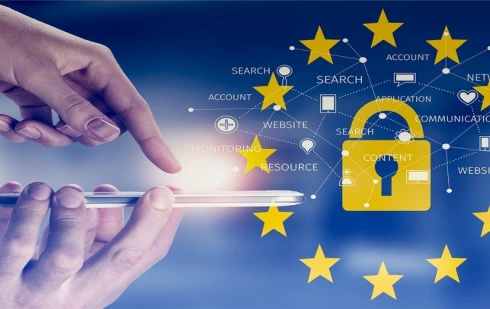
Cutting data protection standards would not help Europe compete in the digital economy, according to a policy paper published by researchers who argue that privacy-friendly technology, not deregulation, is the better path forward.
The paper was produced by the project "Plattform Privatheit," led by the Fraunhofer Institute for Systems and Innovation Research (ISI) together with the University of Kassel. Its authors conclude that Europe's economic future should rest on data protection compliant technologies, digital sovereignty and trustworthy innovation rather than blanket rollbacks of existing rules.
The researchers, led by Michael Friedewald of Fraunhofer ISI and Alexander Roßnagel, who serves as Hesse's data protection commissioner and holds a professorship at the University of Kassel, challenged the widely repeated claim that less privacy regulation automatically produces more innovation. They said this assumption does not hold up when tested against evidence.
According to the paper, the European Union's General Data Protection Regulation is not the central obstacle to innovation that critics often describe. The authors pointed to scientific studies showing that the regulation, in force since 2018, has not triggered a broad decline in innovative activity across the bloc.
Still, the paper acknowledges real difficulties tied to the rules. Large technology companies have generally managed to absorb the compliance burden created by data protection law, the authors found. Start-ups and small and medium-sized enterprises, by contrast, have struggled with administrative overhead and legal uncertainty, putting them at a disadvantage compared with bigger competitors.
To correct that imbalance, the researchers called for targeted relief measures rather than a general weakening of protections. They recommended tying compliance obligations more closely to the actual risk posed by a given data processing activity, and shifting more responsibility onto the makers of standard software rather than leaving smaller firms to shoulder it alone.
On artificial intelligence and data driven business models, the paper argues against the idea that gathering ever larger volumes of data is the key to success. Instead, the authors said, what determines competitive advantage is the quality of data, how well it fits a specific purpose, and whether a company holds exclusive access to particular training data sets.
The authors warned against treating fundamental rights and innovation policy as opposing forces that must be traded off against one another. They argued that in sensitive sectors such as healthcare, financial services and public administration, dependable data protection can itself become a decisive advantage, both commercially and in building public trust.
To prevent Europe's technology gap with the United States and China from widening further, "Plattform Privatheit" set out a series of recommendations. These include targeted funding for artificial intelligence methods that work efficiently with smaller data sets, expansion of regulatory sandboxes, known in the paper as "Reallabore," where new technologies can be tested without regulatory risk, and greater legal certainty for research institutions working with personal data.
The authors suggested that if these steps are taken, compliance with fundamental rights could evolve into an internationally recognized mark of quality for European digital technology, distinguishing it from products developed under looser regulatory regimes elsewhere.
The paper was released as policymakers across the European Union continue to debate how far data protection rules should be adjusted to support the bloc's digital and artificial intelligence industries.
Image by TheDigitalArtist from Pixabay
Section: Politics
Section: Business

Section: Politics

Section: Business

Section: Business

Section: Arts

Section: News

Section: News

Section: Business

Section: Health
Both private Health Insurance in Germany and public insurance, is often complicated to navigate, not to mention expensive. As an expat, you are required to navigate this landscape within weeks of arriving, so check our FAQ on PKV. For our guide on resources and access to agents who can give you a competitive quote, try our PKV Cost comparison tool.
Germany is famous for its medical expertise and extensive number of hospitals and clinics. See this comprehensive directory of hospitals and clinics across the country, complete with links to their websites, addresses, contact info, and specializations/services.
Didn't manage to get a ticket for Linkin Park? Or still not enough after the concert? Join us at CRASH on June 12th for our "IN THE END" Linkin Park Special + CORE NIGHT.All night long, we'll be playing Linkin Park's music, along with Nu Metal, Metalcore, and Alternative Rock from bands such as Limp...



No comments yet. Be the first to comment!